

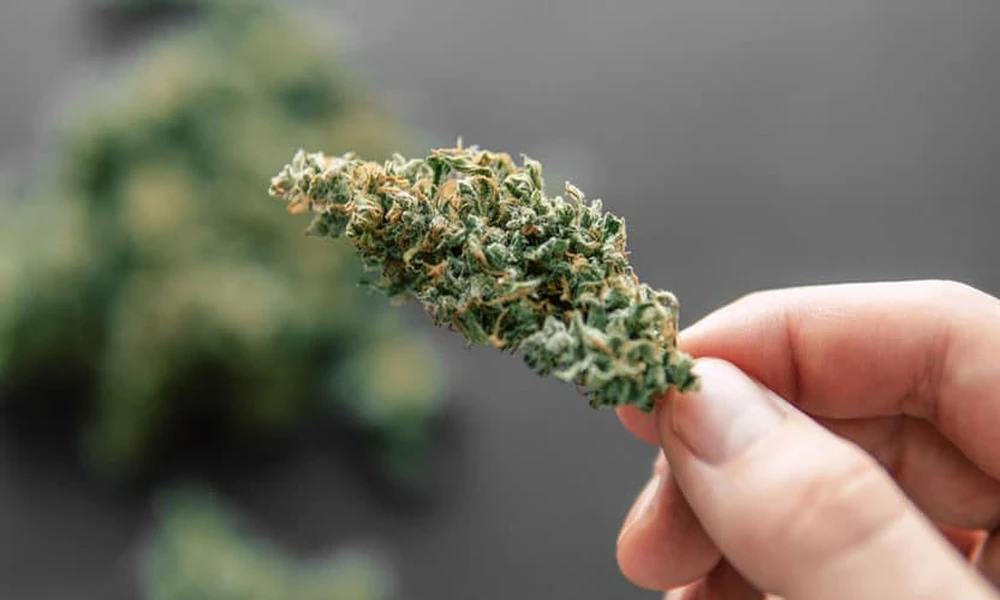
What does structure indicate?
Bud structure reveals more about cultivation quality than most buyers realise when selecting hemp flower. At harvest, specific decisions are made about trichome coverage, colour, and overall form. It is important to read physical signals directly when choosing the best thca flower, rather than relying entirely on potency figures.
A dense, well-formed bud grows where light reaches flowering sites consistently, airflow moves freely through the canopy, and nutrient delivery stays on track from vegetative growth through late flowering. Where any of those variables slipped, the bud reflects it. Loose, airy structure with visible gaps between bracts usually points to light deficiency or environmental inconsistency during flowering. Density and active content accumulation develop in parallel, so what looks underdeveloped often tests that way, too.
How trichomes signal potency?
Trichomes are where active content lives, and their condition at harvest shapes what ends up in finished material more than most buyers account for. A bud coated in milky, cloudy trichomes was cut during peak accumulation. Clear ones mean harvesting arrived too early. Amber’s signal conversion had already begun pulling the profile in another direction. That timing gap cannot be corrected after cutting.
Coverage matters alongside colour. Dense presence across bract surfaces and surrounding sugar leaves reflects a plant given what it needed to accumulate fully. A sparse or uneven distribution indicates stress during flowering, such as heat, humidity swings, or feeding inconsistency.
- Sticky texture when handled signals resin held through post-harvest processing without significant loss.
- Powdery material falling away on contact suggests heat or light-damaged resin quality after cutting.
- Visible density without magnification serves as a reasonable baseline indicator of accumulation strength.
- Flat, dry surface appearance despite intact form often reflects post-harvest mishandling rather than a cultivation problem.
Colour and aroma as markers
Colour gives away more than genetics alone. Chlorophyll breakdown and moisture management are both evident in a deep, consistent green. Overheating or oxidation may cause a drab appearance.
Aroma is harder to fake than appearance. A layered scent on a finished bud indicates no heat damage or excessive oxygen exposure. Flat, faintly grassy smell tells a different story entirely. Terpene loss and active content degradation tend to occur alongside each other because both respond to identical post-harvest conditions. Very little scent on cured material usually reflects handling that was rushed or poorly controlled somewhere after cutting.
Structure under physical assessment
Picking up a bud and applying light pressure reveals things no photograph captures. Properly cured flower resists compression without crumbling, carrying a slight give that reflects moisture sitting in the right range after completion. Rigid or spongy response in either direction signals that something in the drying or curing sequence did not finish correctly.
Stem snap is a practical checkpoint many buyers overlook entirely. A stem running through a well-developed bud breaks cleanly under pressure. Bending without snapping means moisture remains too high and curing fell short. Snapping sharply with visible debris suggests over-drying stripped resin before preservation could hold. Neither scenario requires equipment to detect, and both carry real implications for what the flower actually delivers beyond shelf appearance.
What a bud reveals through direct observation reflects decisions made across the entire production chain, and those signals remain available long before any testing document gets consulted.
